The great educators of American youth may not be the pastors or principals, not the parents or the teachers, but with all due respect to these important individuals – the real educators may just be the school janitors.
I remember the janitor from my elementary school, Ss. Joseph and Paul, although I honestly don’t remember his name. I’m not really sure I ever knew his real name. I always called him Yogi Bear and he always called me Booboo. All the other kids called him Yogi Bear, too; and all the other kids had the same name I did. However, I knew in my heart and in fact that Yogi knew me personally, and that my name meant something very different from all the other Booboos.
So what about the education I received from the school janitor? Volumes could not hold these treasures.
Yogi Bear had a watch, a beautiful gold pocket watch with delicately detailed black hands. It was more than a watch, however. It was a tool. The school ran on it. Mass began by it. Important people may have set the times when things would happen, but they nevertheless happened by Yogi’s watch. He set the classroom clocks and the one in the principal’s office, too. The principal’s important timepiece determined many grave events, but its importance depended on a higher source. Sister Dorothy Marie may have taught me to tell time (or was it my mother?), but Yogi Bear, the school janitor, taught me about time itself, and the sway it held in people’s lives. I learned about time from the timekeeper.
Many privileges and responsibilities came my way in my education; patrol boy, president of the C.S.M.C., student receptionist. There was no task I approached with more awe, however, than those reverent occasions when Yogi Bear handed me the rope (me! imagine!) to pull the Angelus bell. As we awaited the famous watch to tell us just the right moment, Yogi gave me my instructions: the right tension, not too hard, let the rope slide for the second ring before pulling again. Wait. Rhythm is important. I, Booboo, made mistakes, but Yogi Bear had confidence in me. I learned from him that I could have confidence in myself. It might be odd, but I grieve for the boys and girls of today whose churches’ electric chimes deny them the opportunity to learn the mystical lesson of ringing the church bell. Honestly, I still feel its weight and response.
Yogi was a quiet man. He had his own niche in the boiler room, and I suppose I envied him that spot. Niches in boiler rooms are fertile ground for the seeds of contemplation. Yogi moved at his own pace, but always seemed to be working. He was kind to me, always ready to share his knowledge, but perhaps more importantly, his experience. Yogi didn’t necessarily teach the lesson, he was the lesson. He was nobility of character; he was humility – humility in touch with his own intrinsic worth. He was patience and calm.
Yogi shared important, lasting things. He knew about boys and pocket watches, boys and church bells. Gladly would he learn, and gladly teach; but he wasn’t the teacher. He was the school janitor. – T.R.
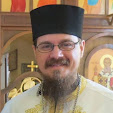
written by Thomas A. Russell
first published in the Lafayette Sunday Visitor on November 8, 1987
Showing posts with label Catholic Education. Show all posts
Showing posts with label Catholic Education. Show all posts
Saturday, March 21, 2009

Monday, October 29, 2007
‘St. Joe and Paul’
They’ve torn down my old school, Sts. Joseph and Paul Grade School in Owensboro, Kentucky. I’m reminded that our children have been growing up but don’t quite realize it. They don’t discern the memories they’re accumulating.
St. Joe and Paul we called it. It’s funny the things that come flooding back from this place that is no more.
I remember wonderful red apples in a book in the first grade. Sister Dorothy Marie’s face shown so pleasantly from her Ursuline bonnet.
I was Sister George Ann’s “little messenger boy” in the second grade. Sister George Ann became president of Brescia College in Owensboro where I also went to school. She died a while back of cancer.
Sister Angelica was indeed an angel, such a kind person. Sister Mary Mercy was very strict and disciplined, but I knew her gentleness, too. Sister Sylvia Mary kept us nailed in our desks and our desks nailed to the floor. But I also remember taking a keen interest in “Voyages in English” that year.
I got my comeuppance as Sister Mary Rose told me one day, “You think you’re pretty smart, Tommy Russell, but you’re just average, boy, just average.”
Sister Mary Rose gave me an “H” on my Kentucky scrapbook. My family had gone on a trip around the state and I included silly things in my scrapbook: bark from a tree at the Lincoln Birthplace Memorial and a rock from the entrance to Mammoth cave. Our grades were S-, S, S+, H, and E in those days, with the more familiar D and F on the other end. Sister Mary Ruth succeeded Sister George Ann as president of Brescia.
Sister Rosita, my eighth grade teacher, got bopped on the head with a ball on the playground, knocking her bonnet off. You can believe there were wide eyes on the playground at that noon recess.
School days, what days they were! I recall tracing an outline of the National Cathedral on a stencil for the school paper. Every class put on a play. I recall dancing a minuet in knickers. I was City Mouse one year and had to eat real crackers on stage!
I so well remember serving Mass. “Ad Deum qui laetificat, juventutem meam.” That was pretty easy. The “Suscipiat” was another matter. I recall laying out vestments, making neat designs with the cincture.
Every year we’d be surprised with fried chicken at lunch and we’d ask Sister what was the special occasion. It was a golden opportunity to tell us about the Feast of Our Lady of Prompt Succor.
I remember the day I learned to spell “Immaculate Conception” and I ran to tell Sister Mary Rose. Sister Mary Mercy told us how important it was to have clean hands and fingernails, “It’s the first thing people notice about you.”
Sister Rosita said never begin a letter with the word “I.” Always think of a way to say something about your reader first, that way you’ll get their attention, she said. It’s also a good way to think about humility.
Sister Aloise, our principal, would play classical music during lunch, and a student would walk around with the name of the piece on a sign. Such odd words! I never entered the contest Sister Aloise conducted to see who could name the most classical melodies.
My school was all education, whether I was warming my hands on the chimney at back of church or having Sister Mary Rose show me how to put depth perspective in a picture of a lane. I learned the meaning of the word “uniform” by aligning all the slats in the Venetian blinds in the cafeteria. Sister Rosita taught me.
I value my Catholic education as one of the great treasures of my life. Those Ursuline nuns gave me gifts of love and friendship and knowledge and faith. My heart is full of fondness for them, and gratitude.
Our children are receiving their education now. It warms my heart to think of the richness of the thing that is happening. We’ll never know all about it. It will be something that belongs to them.
written by Thomas A. Russell
first published in the Lafayette Sunday Visitor on September 28th, 1986
St. Joe and Paul we called it. It’s funny the things that come flooding back from this place that is no more.
I remember wonderful red apples in a book in the first grade. Sister Dorothy Marie’s face shown so pleasantly from her Ursuline bonnet.
I was Sister George Ann’s “little messenger boy” in the second grade. Sister George Ann became president of Brescia College in Owensboro where I also went to school. She died a while back of cancer.
Sister Angelica was indeed an angel, such a kind person. Sister Mary Mercy was very strict and disciplined, but I knew her gentleness, too. Sister Sylvia Mary kept us nailed in our desks and our desks nailed to the floor. But I also remember taking a keen interest in “Voyages in English” that year.
I got my comeuppance as Sister Mary Rose told me one day, “You think you’re pretty smart, Tommy Russell, but you’re just average, boy, just average.”
Sister Mary Rose gave me an “H” on my Kentucky scrapbook. My family had gone on a trip around the state and I included silly things in my scrapbook: bark from a tree at the Lincoln Birthplace Memorial and a rock from the entrance to Mammoth cave. Our grades were S-, S, S+, H, and E in those days, with the more familiar D and F on the other end. Sister Mary Ruth succeeded Sister George Ann as president of Brescia.
Sister Rosita, my eighth grade teacher, got bopped on the head with a ball on the playground, knocking her bonnet off. You can believe there were wide eyes on the playground at that noon recess.
School days, what days they were! I recall tracing an outline of the National Cathedral on a stencil for the school paper. Every class put on a play. I recall dancing a minuet in knickers. I was City Mouse one year and had to eat real crackers on stage!
I so well remember serving Mass. “Ad Deum qui laetificat, juventutem meam.” That was pretty easy. The “Suscipiat” was another matter. I recall laying out vestments, making neat designs with the cincture.
Every year we’d be surprised with fried chicken at lunch and we’d ask Sister what was the special occasion. It was a golden opportunity to tell us about the Feast of Our Lady of Prompt Succor.
I remember the day I learned to spell “Immaculate Conception” and I ran to tell Sister Mary Rose. Sister Mary Mercy told us how important it was to have clean hands and fingernails, “It’s the first thing people notice about you.”
Sister Rosita said never begin a letter with the word “I.” Always think of a way to say something about your reader first, that way you’ll get their attention, she said. It’s also a good way to think about humility.
Sister Aloise, our principal, would play classical music during lunch, and a student would walk around with the name of the piece on a sign. Such odd words! I never entered the contest Sister Aloise conducted to see who could name the most classical melodies.
My school was all education, whether I was warming my hands on the chimney at back of church or having Sister Mary Rose show me how to put depth perspective in a picture of a lane. I learned the meaning of the word “uniform” by aligning all the slats in the Venetian blinds in the cafeteria. Sister Rosita taught me.
I value my Catholic education as one of the great treasures of my life. Those Ursuline nuns gave me gifts of love and friendship and knowledge and faith. My heart is full of fondness for them, and gratitude.
Our children are receiving their education now. It warms my heart to think of the richness of the thing that is happening. We’ll never know all about it. It will be something that belongs to them.
written by Thomas A. Russell
first published in the Lafayette Sunday Visitor on September 28th, 1986
Monday, October 22, 2007
Who’s being taught?
I can’t remember very many homilies, can you? Sister Mary Mercy used to make us fourth graders write a paragraph saying what Father said in his sermon on Sunday. (They called them sermons in those days). What torture! Next in severity would be bamboo shoots under the fingernails.
It was probably the most taxing task of my grade school career (besides, of course, anything having to do with geography). Knowing what I know now, Sister Mary Mercy herself, doubtless would have had difficulty doing her own assignment.
Psychologists tell us that we remember only about 10 percent of what we hear, so the expression “in one ear and out the other” must have some validity.
All of this brings me to my point: How and when and under what circumstances are Catholics being taught their faith? I submit that we are starving.
This is a strictly subjective opinion, of course. Opposing views are most welcome. But it seems to me that the only Church teaching most adult Catholics receive is that 10 or 15 minutes each week at Mass.
Sure, Father puts his very best into the preparation of his homilies. But can this be sufficient teaching for a living faith?
Of course, CCD is in place. Catholic schools are open. Many parishes have RCIA programs for new Catholics, which help some old ones in the bargain. But what about most Catholics between high school and the grave? There is no question that television has a greater place in many Catholics’ lives than learning about their faith does.
The Holy Fathers have written a bunch of encyclicals. Why do they do this? Honestly now, have you ever read one?
The U.S. bishops have taken to writing pastoral letters on a variety of life-touching subjects. Can you apply the content of these letters to your life?
The problem, of course, is to find a way for this teaching to reach the people it is intended to guide.
The call these days is to individual responsibility, ownership of our relationship with God and the Church, personal accountability. However, there are two flies in that ointment.
One: The concept of responsible leadership has not been abandoned.
Two: There are still plenty of Catholics out there who are like sheep without a shepherd, despite protestations to the contrary. People need to be led, inspired, guided, shown the way. A sheep won’t say, “Lead me.” A sheep will wander aimlessly – or watch TV.
I won’t offload to the priests the whole responsibility for communicating Church teaching, but I will give them their share. They certainly are leaders, and in a position to make a difference.
Laity with some gumption also are needed in this task. Laity with God-given leadership abilities should be rising to the God-given mandate to share this faith of ours.
Parents have a primary teaching role – ahead of the schools and CCD. That has to imply that they themselves bone up: either to put themselves in environments, or to create environments, wherein the faith is nurtured.
The Catholic press has been woefully underutilized. Catholic newspapers and magazines simply are not in the same league with the secular press, but can and should be a primary and effective tool in communicating Church teaching.
To the credit of many pastors and parishes, adult education classes are offered. But who goes? Nine or 10 show up, half of whom are qualified to teach the class themselves.
There’s plenty to be learned. Besides the steady outpouring of teaching by the Magisterium, it might be a good day for Sacred Scripture to make a comeback. We, Catholics, have lived in fear of private interpretation of Scripture for so long that we scarce crack the book unless we’re in the presence of a priest. That has got to stop.
Perhaps I have lapsed into a little testiness and cynicism. Forgive me. My point is that homilies – and I’ve heard some good ones – are not enough. For one thing, I’m going to be looking into some ways for this newspaper to be a more effective forum for communicating substantive Church teaching. Surely there are other ways to boost the resources we have.
The hour is late for creative leadership and greater personal responsibility, but not too late.
written by Thomas A. Russell
first published in the Lafayette Sunday Visitor in July of 1986
It was probably the most taxing task of my grade school career (besides, of course, anything having to do with geography). Knowing what I know now, Sister Mary Mercy herself, doubtless would have had difficulty doing her own assignment.
Psychologists tell us that we remember only about 10 percent of what we hear, so the expression “in one ear and out the other” must have some validity.
All of this brings me to my point: How and when and under what circumstances are Catholics being taught their faith? I submit that we are starving.
This is a strictly subjective opinion, of course. Opposing views are most welcome. But it seems to me that the only Church teaching most adult Catholics receive is that 10 or 15 minutes each week at Mass.
Sure, Father puts his very best into the preparation of his homilies. But can this be sufficient teaching for a living faith?
Of course, CCD is in place. Catholic schools are open. Many parishes have RCIA programs for new Catholics, which help some old ones in the bargain. But what about most Catholics between high school and the grave? There is no question that television has a greater place in many Catholics’ lives than learning about their faith does.
The Holy Fathers have written a bunch of encyclicals. Why do they do this? Honestly now, have you ever read one?
The U.S. bishops have taken to writing pastoral letters on a variety of life-touching subjects. Can you apply the content of these letters to your life?
The problem, of course, is to find a way for this teaching to reach the people it is intended to guide.
The call these days is to individual responsibility, ownership of our relationship with God and the Church, personal accountability. However, there are two flies in that ointment.
One: The concept of responsible leadership has not been abandoned.
Two: There are still plenty of Catholics out there who are like sheep without a shepherd, despite protestations to the contrary. People need to be led, inspired, guided, shown the way. A sheep won’t say, “Lead me.” A sheep will wander aimlessly – or watch TV.
I won’t offload to the priests the whole responsibility for communicating Church teaching, but I will give them their share. They certainly are leaders, and in a position to make a difference.
Laity with some gumption also are needed in this task. Laity with God-given leadership abilities should be rising to the God-given mandate to share this faith of ours.
Parents have a primary teaching role – ahead of the schools and CCD. That has to imply that they themselves bone up: either to put themselves in environments, or to create environments, wherein the faith is nurtured.
The Catholic press has been woefully underutilized. Catholic newspapers and magazines simply are not in the same league with the secular press, but can and should be a primary and effective tool in communicating Church teaching.
To the credit of many pastors and parishes, adult education classes are offered. But who goes? Nine or 10 show up, half of whom are qualified to teach the class themselves.
There’s plenty to be learned. Besides the steady outpouring of teaching by the Magisterium, it might be a good day for Sacred Scripture to make a comeback. We, Catholics, have lived in fear of private interpretation of Scripture for so long that we scarce crack the book unless we’re in the presence of a priest. That has got to stop.
Perhaps I have lapsed into a little testiness and cynicism. Forgive me. My point is that homilies – and I’ve heard some good ones – are not enough. For one thing, I’m going to be looking into some ways for this newspaper to be a more effective forum for communicating substantive Church teaching. Surely there are other ways to boost the resources we have.
The hour is late for creative leadership and greater personal responsibility, but not too late.
written by Thomas A. Russell
first published in the Lafayette Sunday Visitor in July of 1986
Subscribe to:
Posts (Atom)